
Why is colostrum the most important food the calf will receive throughout its life?
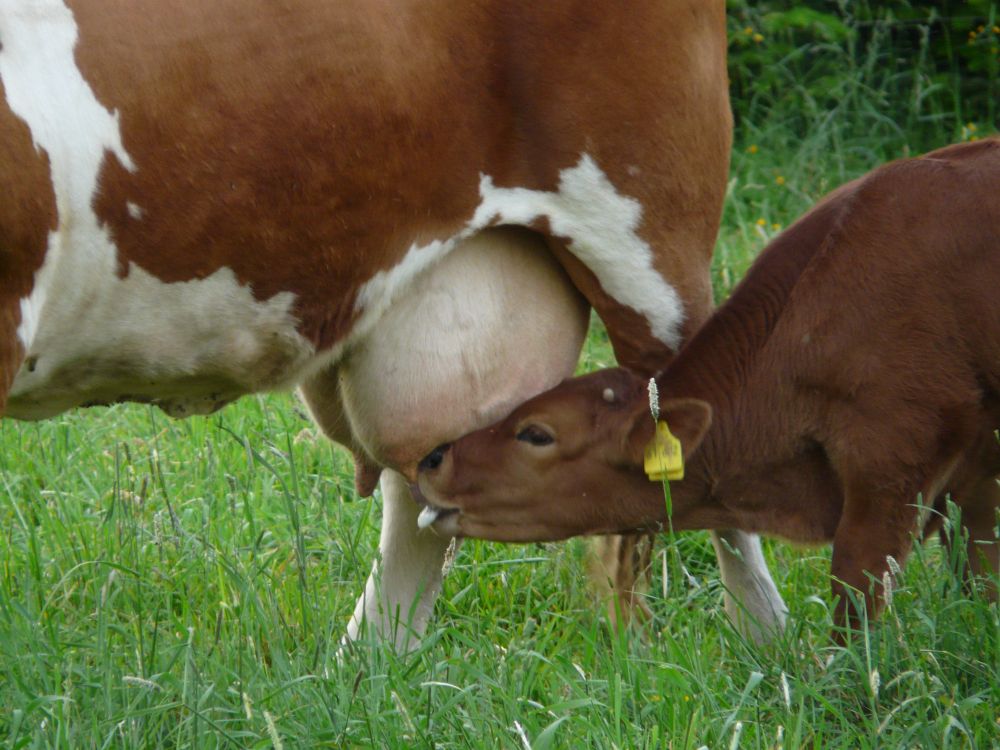
Colostrum is the most important food the calf will receive for its entire life, as it contains vital antibodies to protect the calf from infections, many of which occur more…
Colostrum is the most important food the calf will receive throughout its life, as it contains vital antibodies to protect the calf from infections, many of which are encountered early in development.
In a study comparing blood immunoglobulin levels and pre-weaning mortality rates in calves, it was found that calves with less than 800IgG/L in the blood after 24 hours had a pre-weaning mortality rate of 27%. (Leonal Leal, November 19, 2019) In calves whose blood immunoglobulin content is in the range of 800IgG to 1,200IgG, the mortality rate falls below 10%, in cases where the content is above 1,200IgG, the mortality rate is only 3%.
Immunoglobulins are the antibodies that enter the blood after the calf has ingested colostrum.
The amount of immunoglobulin in the blood is affected by:
- The amount of colostrum received;
- The quality of the colostrum;
- How long after birth did the calf take the colostrum.
According to data from scientific studies
- Only 75% of calves fed 2 liters of colostrum survived their first two lactations versus 87% for those fed 4 liters.
- Those fed 2 liters had an average daily gain (DAG) of 0.8 kg vs. an average daily gain (DAG) of 1 kg. in those fed with 4 liters.
The amount of milk produced by a lactating cow is also affected by the amount of colostrum received when she was a newborn calf. Data show that calves fed 4 liters of colostrum produce up to 10,000 kg of milk during their second lactation.
Another study compared colostrum feeding through a feeding tube and bottle feeding to see if there was a difference in blood immunoglobulin levels. Immunoglobulins in the blood were exactly the same in both feeding methods.
The time to the first feeding of colostrum from birth is another aspect evaluated. It turns out that calves fed up to the first hour after birth have much higher levels of immunoglobulin in the blood than those fed on the 6th or 8th hour after birth.
HL-TopMix specialists advise:
- Maintain a high level of cleanliness in the farm.
- Feed the calf within the first hour after birth or as soon as possible after birth - preferably by the second hour.
- Feed with milk substitute or whole milk with a temperature of 39-40 °C
- Feed only colostrum with values greater than 22% on the BRIX refractometer;
- Feed the calf 3-4 liters of colostrum within 2 hours of birth or 8.5% of the weight of the newborn calf.
- It is strongly recommended that farmers test the quality of colostrum fed to calves, for example using a BRIX refractometer or other similar device.